
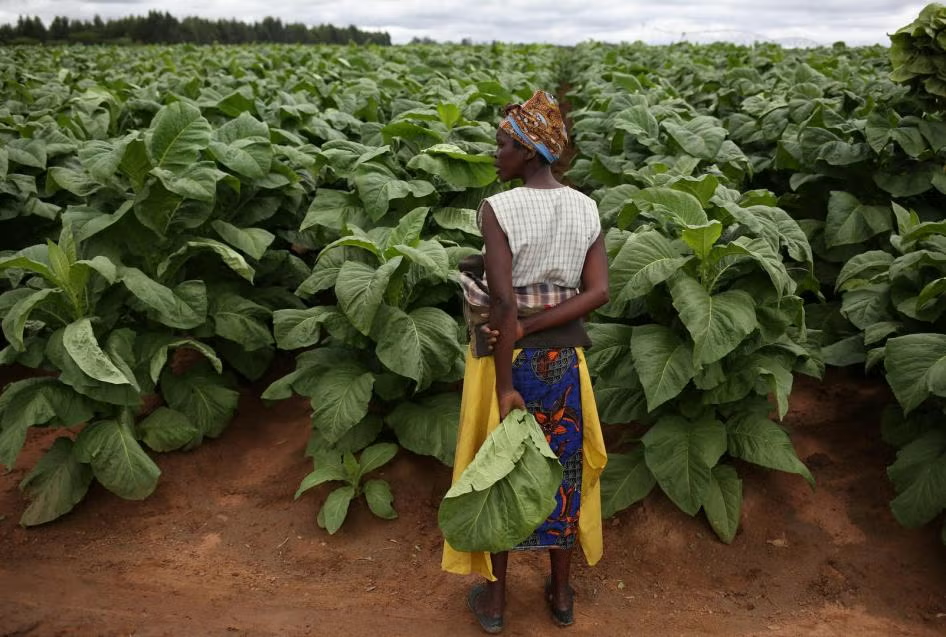
Tobacco is Zimbabwe's leading agricultural export and economic lifeline, with the country ranking as the largest producer in Africa and the fourth largest globally. The sector primarily produces Virginia flue-cured tobacco, heavily driven by smallholder farmers who make up about 85% of total national production.
Industry Snapshot
- Global Standing: 4th largest producer in the world (behind China, Brazil, and the USA).
- Production Types: Virginia flue-cured (over 95% of the crop), Burley, and Oriental.
- Key Regions: Mashonaland West, Mashonaland Central, Mashonaland East, and Manicaland.
- Economic Impact: Generates over US$1 billion annually, serving as one of the nation's primary sources of foreign currency.
How the Market Works
- Contract Farming: Approximately 95% of the national crop is grown under a contract farming system, where merchants provide farmers with essential inputs (seed, fertilizer, chemicals) in exchange for purchasing the yield. Only a minor percentage of the crop is self-financed.
- Sales & Pricing: Sales are conducted via a dual system of auction floors and contract buying. A minimum price matrix based on market conditions is used to regulate the sales and ensure competitive pricing for growers.
- Regulatory Body: The industry is strictly regulated by the Tobacco Industry Marketing Board (TIMB), which oversees registration, booking, and sales to curb issues like side-marketing.
Sustainability and Challenges
- Deforestation: Historically, curing tobacco with indigenous wood has led to significant deforestation. TIMB and the government mandate that every grower must establish 0.2 hectares of exotic tree species (such as Eucalyptus) for every hectare of tobacco planted.
- Profitability vs. Risk: While a hectare of tobacco can potentially generate profits of US$6,000 to US$10,500, production costs and early-season price volatility pose substantial financial risks. The national average yield sits at roughly 2.3 tonnes per hectare, though top-tier research varieties can yield up to 4.5 tonnes.
To track the current selling season, review daily minimum prices, or find grower registration requirements, you can visit the official Tobacco Industry Marketing Board (TIMB) Portal.